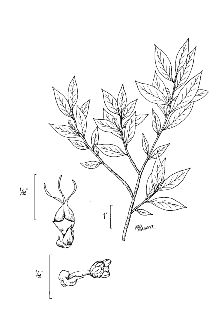
Sebastiania fruticosa (W. Bartram) Fernald
Scientific Name: Sebastiania fruticosa (W. Bartram) Fernald
Classification: Plantae/ Tracheobionta / Spermatophyta / Magnoliophyta / Magnoliopsida / Rosidae / Euphorbiales / Euphorbiaceae / Ditrysinia Raf./ Sebastiania fruticosa (W. Bartram) Fernald
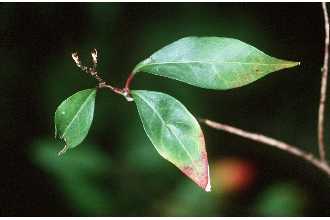
| General Information |
| Usda Symbol | SEFR |
| Group | Dicot |
| Life Cycle | Perennial |
| Growth Habits | ShrubSubshrub, |
| Native Locations | SEFR |
Plant Guide
Use a soil moisture meter to monitor the soil moisture where Sebastiania fruticosa (W. Bartram) Fernald is planted.
Plant Traits
Growth Requirements
| Temperature, Minimum (°F) | -15 |
|---|
| Adapted to Coarse Textured Soils | Yes |
|---|
| Adapted to Fine Textured Soils | No |
|---|
| Adapted to Medium Textured Soils | No |
|---|
| Anaerobic Tolerance | Medium |
|---|
| CaCO3 Tolerance | Low |
|---|
| Cold Stratification Required | Yes |
|---|
| Drought Tolerance | Medium |
|---|
| Fertility Requirement | Medium |
|---|
| Fire Tolerance | Medium |
|---|
| Frost Free Days, Minimum | 207 |
|---|
| Hedge Tolerance | Low |
|---|
| Moisture Use | Low |
|---|
| pH, Maximum | 6.0 |
|---|
| pH, Minimum | 4.0 |
|---|
| Planting Density per Acre, Maxim | 4800 |
|---|
| Planting Density per Acre, Minim | 1200 |
|---|
| Precipitation, Maximum | 68 |
|---|
| Precipitation, Minimum | 33 |
|---|
| Root Depth, Minimum (inches) | 24 |
|---|
| Salinity Tolerance | None |
|---|
| Shade Tolerance | Tolerant |
|---|
Morphology/Physiology
| Bloat | None |
|---|
| Toxicity | Severe |
|---|
| Resprout Ability | No |
|---|
| Shape and Orientation | Erect |
|---|
| Active Growth Period | Summer and Fall |
|---|
| C:N Ratio | High |
|---|
| Coppice Potential | No |
|---|
| Fall Conspicuous | Yes |
|---|
| Fire Resistant | No |
|---|
| Flower Color | Green |
|---|
| Flower Conspicuous | No |
|---|
| Foliage Color | Green |
|---|
| Foliage Porosity Summer | Moderate |
|---|
| Foliage Porosity Winter | Moderate |
|---|
| Foliage Texture | Medium |
|---|
| Fruit/Seed Conspicuous | No |
|---|
| Nitrogen Fixation | None |
|---|
| Low Growing Grass | No |
|---|
| Lifespan | Short |
|---|
| Leaf Retention | Yes |
|---|
| Known Allelopath | No |
|---|
| Height, Mature (feet) | 12.0 |
|---|
| Height at 20 Years, Maximum (fee | 18 |
|---|
| Growth Rate | Moderate |
|---|
| Growth Form | Multiple Stem |
|---|
| Fruit/Seed Color | Brown |
|---|
Reproduction
| Vegetative Spread Rate | Slow |
|---|
| Small Grain | No |
|---|
| Seedling Vigor | Medium |
|---|
| Seed Spread Rate | Slow |
|---|
| Seed per Pound | 3600 |
|---|
| Fruit/Seed Persistence | Yes |
|---|
| Propagated by Tubers | No |
|---|
| Propagated by Sprigs | No |
|---|
| Propagated by Sod | No |
|---|
| Propagated by Seed | Yes |
|---|
| Propagated by Corm | No |
|---|
| Propagated by Cuttings | No |
|---|
| Bloom Period | Summer |
|---|
| Commercial Availability | No Known Source |
|---|
| Fruit/Seed Abundance | Low |
|---|
| Fruit/Seed Period Begin | Summer |
|---|
| Fruit/Seed Period End | Fall |
|---|
| Propagated by Bare Root | No |
|---|
| Propagated by Bulb | No |
|---|
| Propagated by Container | No |
|---|
Suitability/Use
| Veneer Product | No |
|---|
| Pulpwood Product | No |
|---|
| Protein Potential | Low |
|---|
| Post Product | No |
|---|
| Palatable Human | No |
|---|
| Palatable Graze Animal | Low |
|---|
| Palatable Browse Animal | Low |
|---|
| Nursery Stock Product | No |
|---|
| Naval Store Product | No |
|---|
| Lumber Product | No |
|---|
| Fuelwood Product | Medium |
|---|
| Fodder Product | No |
|---|
| Christmas Tree Product | No |
|---|
| Berry/Nut/Seed Product | No |
|---|